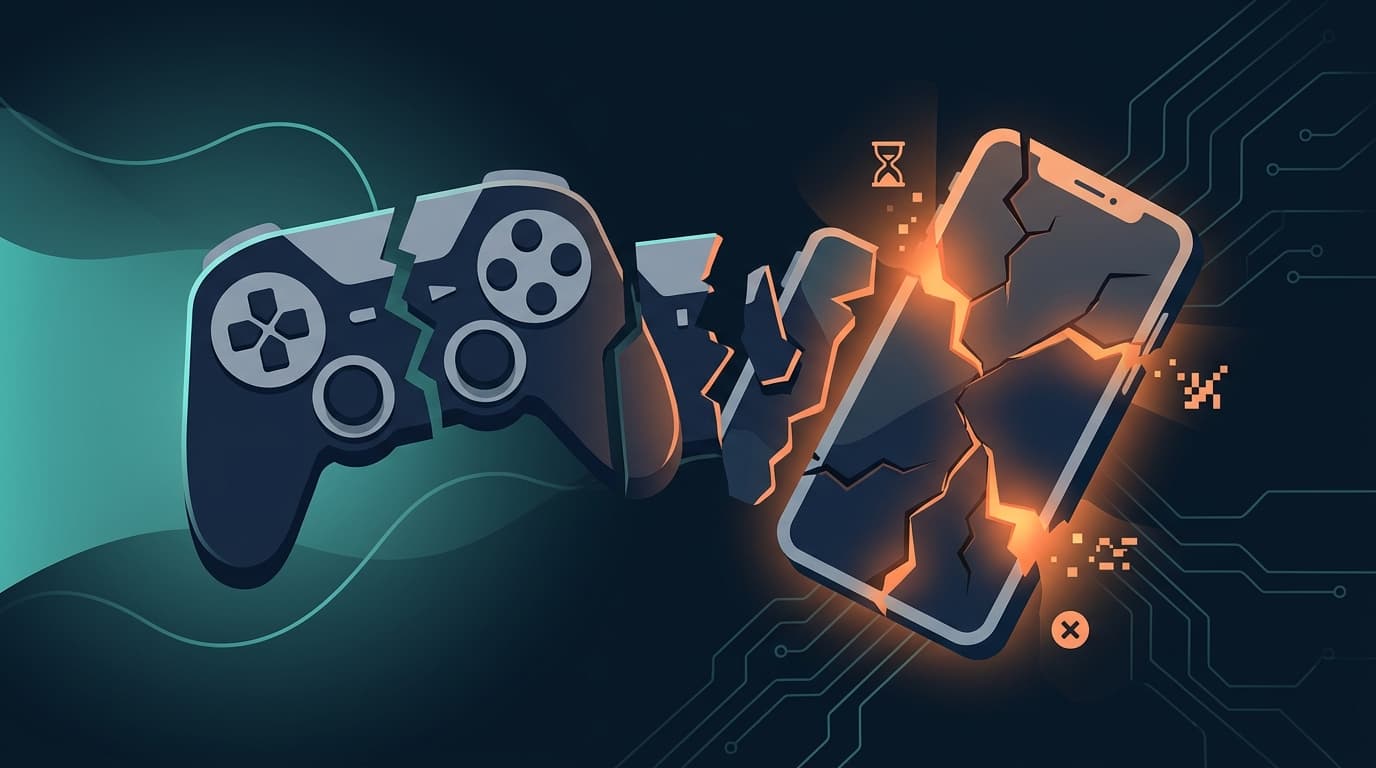
The review problem nobody talks about
A poor mobile port doesn't just collect 1-star reviews on the App Store. Those reviews become the first result when anyone searches your game's name, and they travel. They show up in forum threads, in YouTube comment sections, in Reddit posts that live forever. And eventually they travel back to the one place you care about most: your Steam page.
We've seen this happen more than once. A studio ships a technically functional mobile port. It runs, it doesn't crash, it has a virtual joystick. Within three months the Steam reviews section has a new subsection: "Great game, but avoid the mobile version." That sentiment doesn't stay on mobile. It becomes part of how players talk about the game, full stop.
"Bad touch controls don't just get 1-star reviews. They travel back to your Steam page."
What "functional" and "good" actually mean
The baseline for "it works" on mobile is dangerously low. A game that runs at 30fps on an iPhone 12, has a virtual D-pad in the corner, and doesn't crash is technically functional. It will pass App Store review. It may even sell a few copies. But it's not a good port.
A good mobile port feels like it was designed for the platform it's on. That means:
- Input redesign, not remapping. Buttons don't translate to touch. The best mobile ports rebuild input from scratch around what fingers can actually do comfortably.
- UI rethought for thumb reach zones. A PC game's UI is designed for a mouse and a 24-inch monitor. On a phone, primary actions need to live within the natural grip arc of both thumbs.
- Performance with thermal headroom. Sustained 60fps on mobile means targeting 45fps on your test device so there's room for thermal throttling. Most PC developers don't think about this until they see the overheating reports.
- Session design adjusted for context. Mobile players often play in 5–15 minute bursts. If your game has 45-minute levels with no save points, the mobile port needs to rethink that at the design level.
The reputation math
Here's the calculation that studios almost never run before they ship a cheap port:
Your game has 4.7 stars on Steam across 12,000 reviews. It took years to earn that. You ship a mobile port that costs $40,000 to build, mostly because you found a contractor who would do it for that price. The port launches to 2.4 stars. Within a year, when someone searches your game's name, the Google autocomplete suggests "mobile port bad." That association follows the IP.
Now imagine you want to do a sequel, an expansion, or a console port. You're now doing all of that from under a reputational cloud that a $40,000 savings created. The math almost never works out in favour of doing the port cheaply.
The three failure modes we see most often
1. The "D-pad dump"
A virtual D-pad is slapped over the game's PC input layer. Players hate it. They feel like they're fighting the interface. Review: "Why would they ruin a great game with this control scheme?" This is the most common failure and the most recoverable, but only if you catch it before launch, not after.
2. The thermal cliff
The port runs fine on newer devices in QA. On an iPhone 13 Pro, it plays beautifully for the first 20 minutes, then suddenly runs at half speed as the device throttles to manage heat. QA passed it because QA never ran 40-minute sessions. Players discover it immediately. Review: "Starts great, becomes unplayable after 15 minutes."
3. The battery vampire
The game drains 30% battery per hour. This is acceptable for a 15-minute session game. For a long-form RPG, it means players can't finish a session on public transport. They play less. They churn. The game doesn't get recommended to friends. Revenue tails off. Nobody writes a review. They just leave.
What to do instead
The answer isn't "spend more money." It's "spend money on the right things." A mobile port that properly rethinks input, optimises for sustained thermal performance, and redesigns UI for thumb reach costs more than a D-pad dump, but it costs a fraction of the reputational recovery you'll need if you ship the cheap version.
The studios we work with who have the best outcomes treat the mobile port as a new edition of the game, not a conversion of it. That's the mindset shift that makes the difference, made before a single line of code is written.
If you're weighing whether a port is worth doing and at what quality level, we're happy to do a free assessment. It takes five minutes to request and we'll tell you honestly whether your game is a good candidate and what the right scope looks like.